Mimosa Hostilis Root Bark: Chips, Shredded, or Powder — Which Should You Buy?
If you're new to Mimosa Hostilis inner root bark, the first question most people run into isn't about mordants or dye baths — it's a simpler one: which form should I actually order?
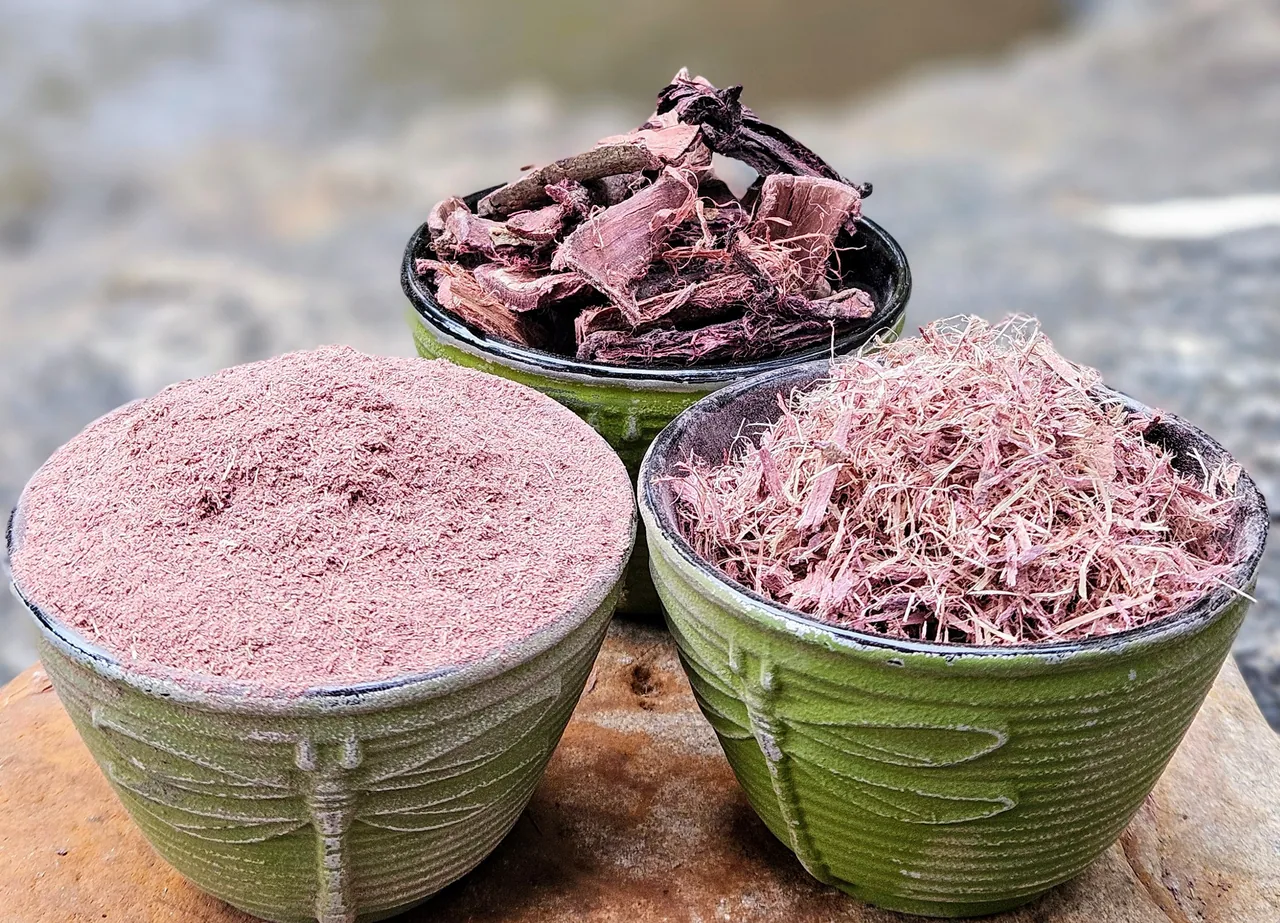
Chips, shredded, and powder are the three formats available here at Violet Dye Co, and the difference matters more than it might look. They come from the same plant, same root, same bark — but they behave differently in practice, and buying the wrong one for your workflow wastes both time and material.
Chips: the least processed form
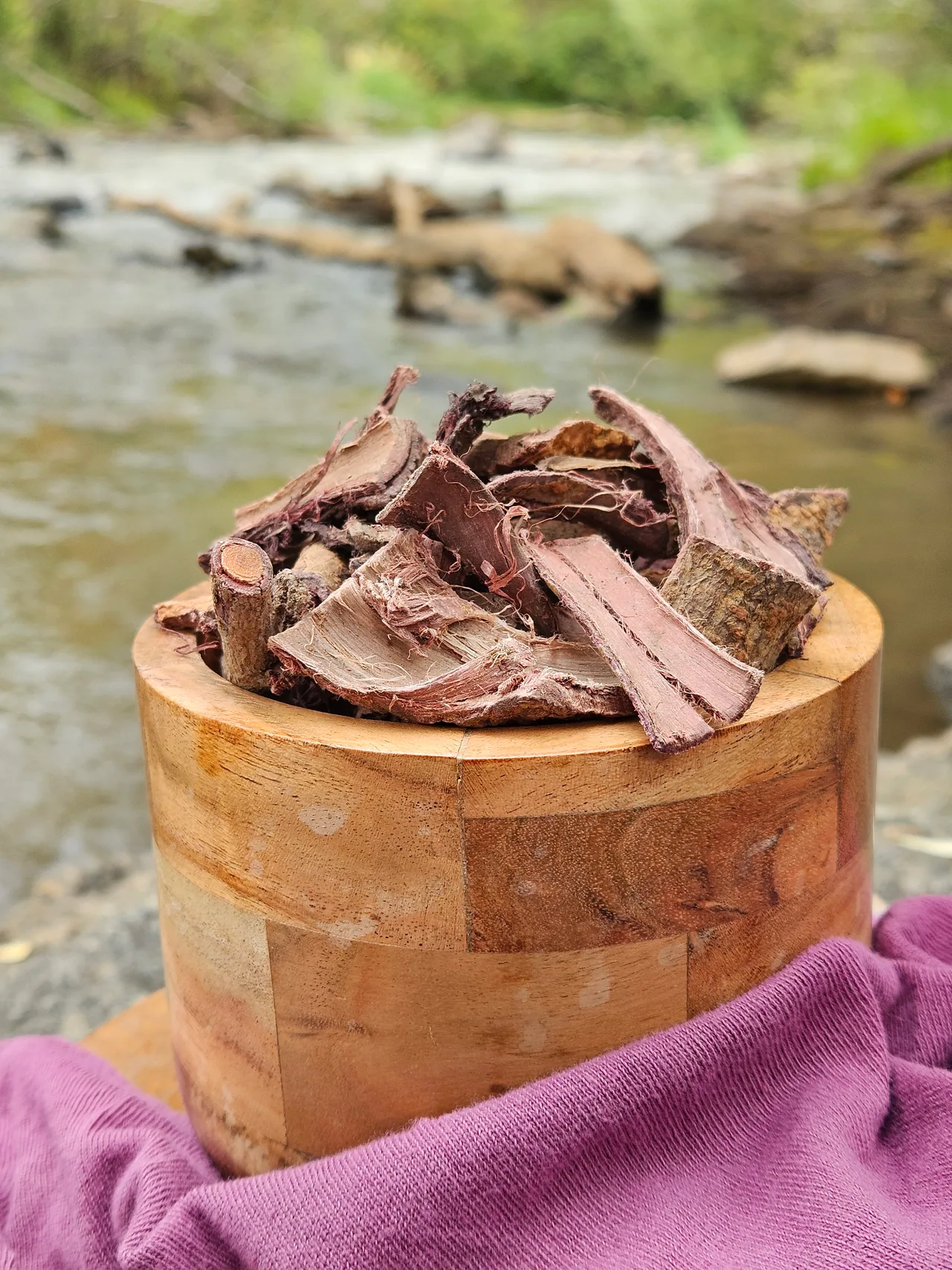
Bark chips are whole pieces of inner root bark, broken down minimally from their raw state. They're the closest to the bark as it comes off the root — irregular, dense, and visually the most obviously botanical of the three formats.
Because they're the least processed, chips release their tannins and pigment slowly. This makes them ideal for extended steeping and traditional dye preparation — the long, patient processes that have been used in artisan textile work for centuries. If you're running large-batch natural dye projects where you want a gradual, controlled release over hours, chips are the right tool.
What chips aren't suited for: anything that requires fast incorporation or fine dispersion. Soap making, for example, doesn't give you time for a long steep. And for beginners just getting started with natural dyeing, the slower release adds a variable that's harder to manage until you know what you're looking for.
Shredded: the versatile middle ground
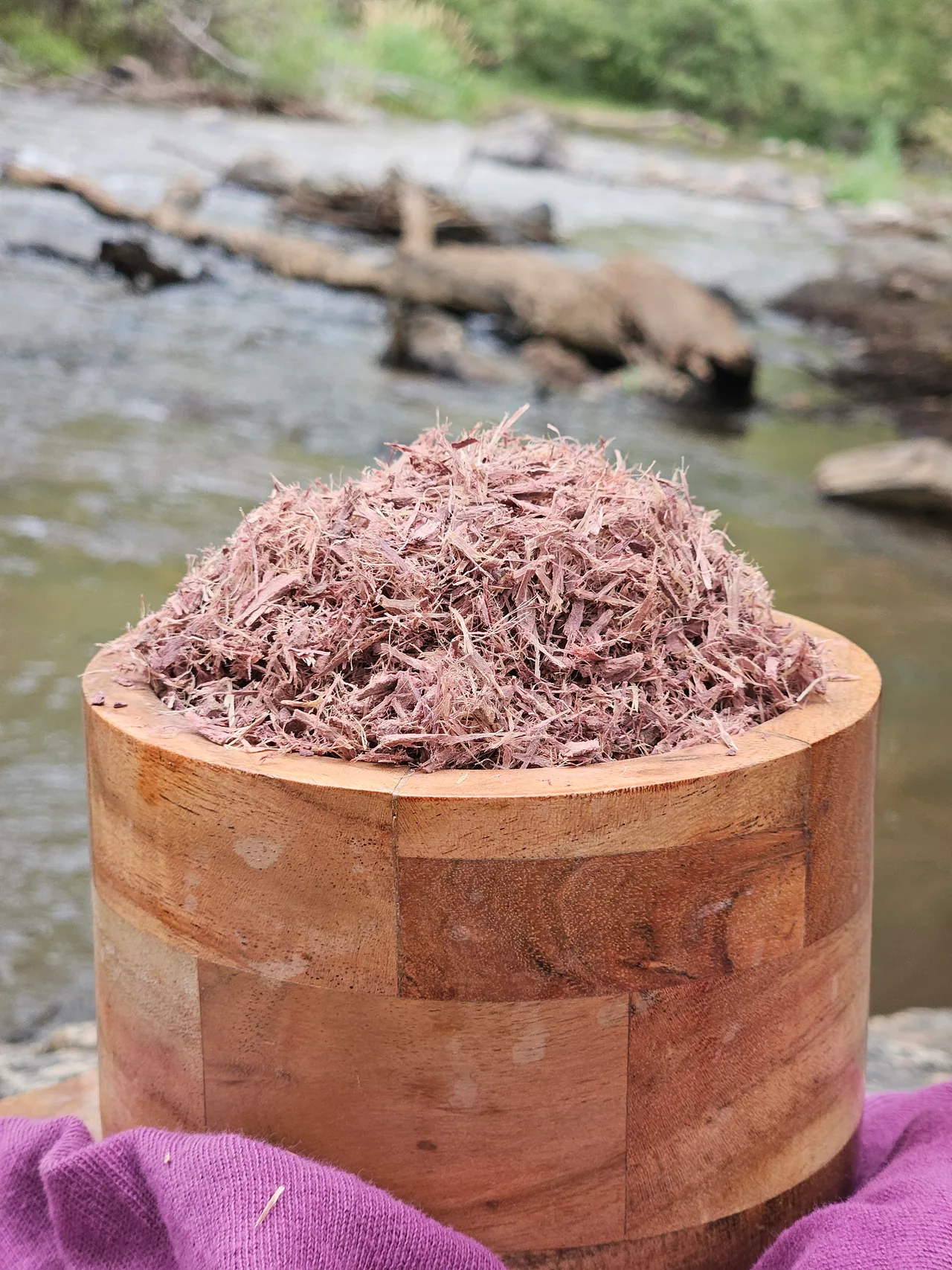
Shredded bark is hand-processed into fibrous strips — more broken down than chips, but still clearly bark. The increased surface area compared to chips means faster color release, while still giving you the control of a slow-steep process.
It's a natural fit for dye baths where you want rich, long-lasting color with natural fiber mordants — wool, cotton, silk, linen — without committing to the extended timeline that chips require. The fibrous texture also makes it easier to strain from a dye bath than powder, which can pass through coarser strainers.
Shredded bark is the format most experienced natural dyers gravitate toward once they know their process. It rewards a little patience and gives you room to adjust — stronger bath, weaker bath, longer steep — in a way that powder's speed doesn't always allow.
Powder: maximum color release, minimum effort
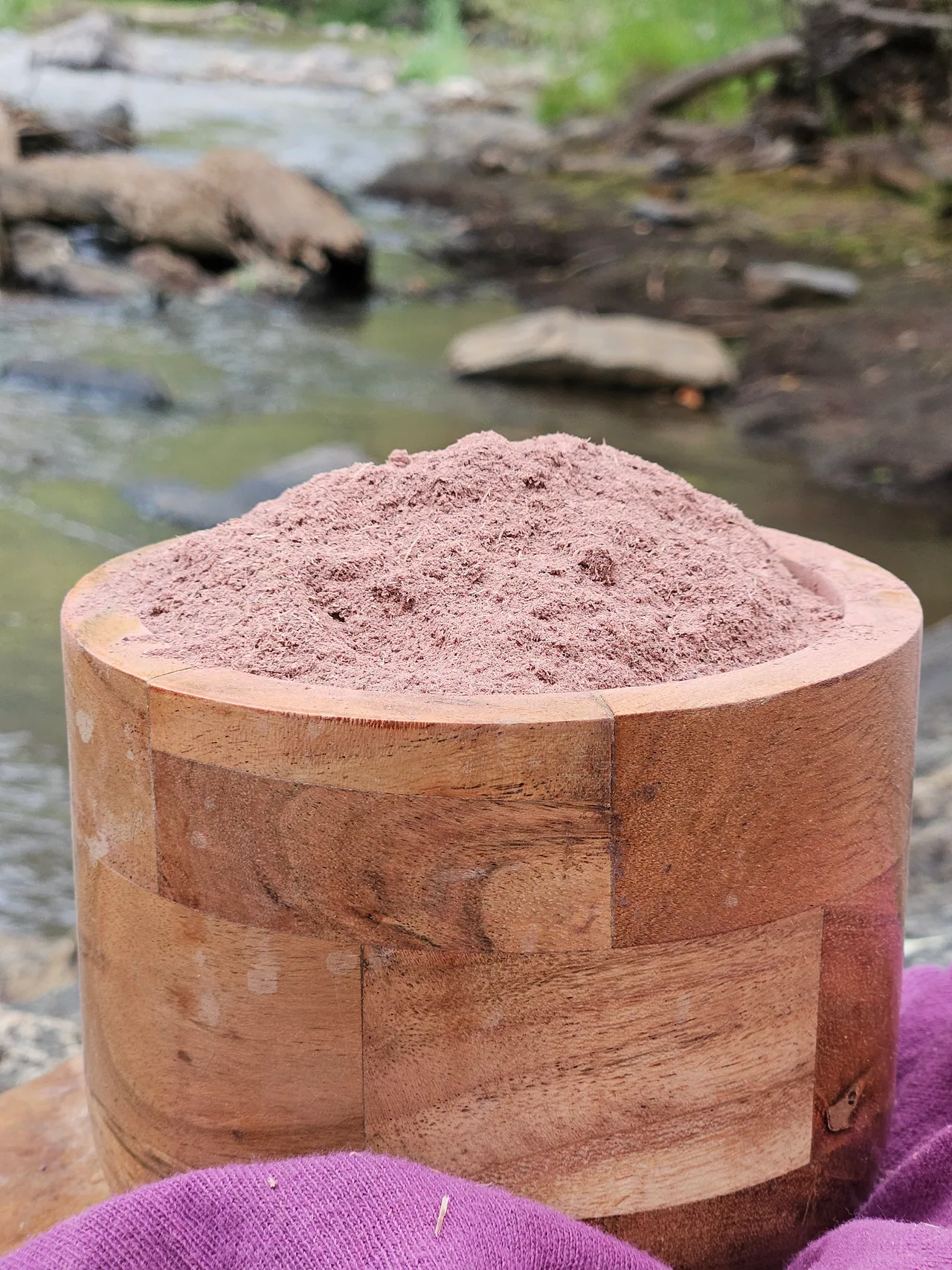
Powder is finely milled inner root bark. Same compounds, dramatically more surface area, which means faster and more concentrated color. It's designed for maximum color release from the start.
For natural fabric dyeing, powder extracts quickly and can produce the same mauve-to-purple range as the other forms, but its fine sediment requires more careful straining. Shredded is the easier starting point for a first fabric-dyeing project; choose powder when speed or a concentrated bath matters. For cold process soap making, powder is the only practical choice: you're incorporating the bark into a batter that sets in hours, and powder disperses evenly throughout without additional processing.
Which format to choose, by use case
- Natural fabric dyeing, small batch: Shredded for an easy-to-manage first bath; powder when faster extraction is the priority.
- Natural fabric dyeing, large batch or artisan textile work: Chips. Extended steeping, traditional preparation, built for the long process.
- Cold process soap making: Powder, without question. It's what the format is made for.
- Leather tanning: Chips or shredded. The slow tannin release suits the timeline and the traditional process.
- General botanical or craft use: Any format works. Chips and shredded are easier to measure by volume; powder by weight.
- First fabric-dyeing project: Start with shredded. It is easy to strain and gives you time to learn how the bath develops.
Questions about which form suits your project?
That's exactly what we're here for. Get in touch and we'll help you find the right format and quantity.