How to Identify High-Quality Mimosa hostilis Inner Root Bark Before You Buy
What color, texture, processing, storage, and supplier transparency can—and cannot—tell you
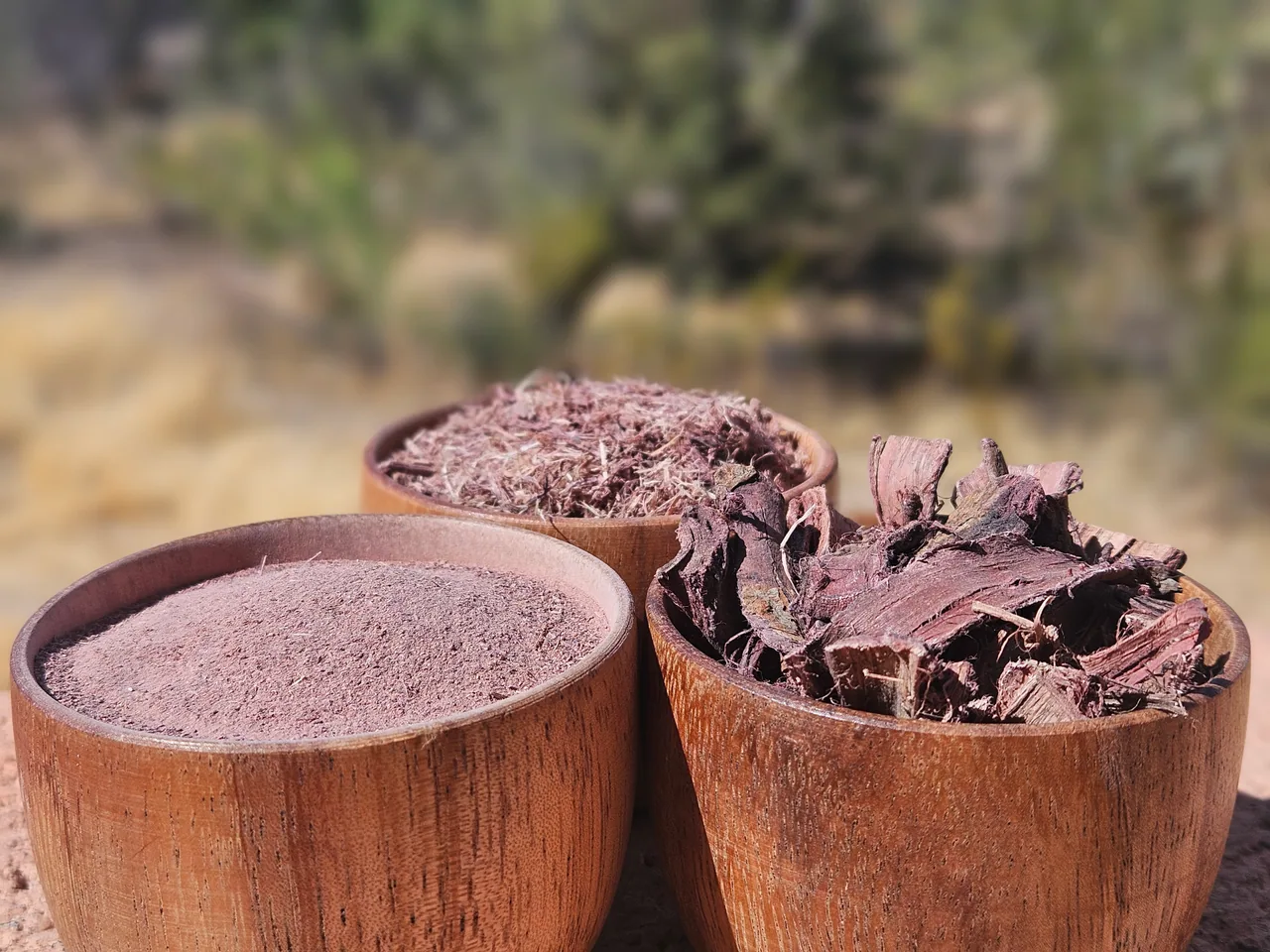
Buying a natural dye material is not quite like buying a jar of manufactured pigment. There is no perfectly uniform color code, no guarantee that two harvests will behave exactly alike, and no single photograph that can tell you everything you need to know.
That variation is part of working with plants. It is also why learning to recognize useful signs—and the limits of those signs—matters.
Mimosa hostilis inner root bark, from the plant botanically known as Mimosa tenuiflora, is valued by dyers for the earthy reds, mauves, plums, burgundies, and darker iron-shifted colors it can produce. But the words “Mimosa hostilis” on a product page do not, by themselves, tell you which part of the root you are buying, how carefully it was processed, how it was stored, or how much color it will give under your process.
You cannot confirm every aspect of a botanical material before buying it. You can, however, evaluate the information a seller provides, inspect the material when it arrives, and test its performance before committing an important piece of fabric or a full batch.
Before ordering: look for “inner root bark”
The first useful distinction is not simply root bark versus trunk bark. It is whether the seller clearly identifies the material as inner root bark rather than using “root,” “bark,” and “wood” as though they are interchangeable.
Roots contain different tissues. The rough exterior, the fibrous bark layers, and the denser woody center do not look or behave exactly alike. In chip form, inner root bark commonly appears as irregular pieces with layered grain, reddish to brown-red interior surfaces, and fibers separating at some edges.
Some natural variation is normal. Minimally processed chips may retain pieces of exterior surface, and not every broken face will have the same color. A product that appears to consist mainly of pale, dense wood with very little fibrous material deserves more questions.
Powder is harder to judge from structure because milling removes the original visual clues. That makes clear labeling especially important. Look for a seller that identifies what plant part was milled and provides enough information or imagery to help you understand what is being offered.
Before ordering: examine the photographs, not just the color
Mimosa hostilis inner root bark often falls within a broad family of rust, reddish brown, muted burgundy, dusty rose, and deep brown-red. Chips may show several of those colors in one handful. Shredded bark can appear lighter where fine fibers catch the light, while powder usually looks softer and more uniform.
No exact shade proves authenticity or quality. Cameras, phone screens, white balance, lighting, milling dust, moisture, origin, harvest conditions, age, and natural batch variation can all affect appearance.
The most useful product photographs are therefore not always the most dramatic ones. Look for:
- close views that reveal grain and texture;
- more than one angle or bark form;
- enough visual context to understand the form of the chips or shreds;
- material shown in ordinary or natural-looking light; and
- realistic variation rather than a perfectly uniform presentation.
A supplier willing to show irregularity may be giving you more useful information than one presenting a highly saturated photograph under strongly colored studio lighting.
Color can help you decide what questions to ask, but a photograph cannot establish species, purity, freshness, storage history, or dye performance by itself.
Before ordering: evaluate the seller as well as the bark
A useful supplier description is specific without pretending to know what cannot be known. Depending on the product and the claims a seller makes, helpful information may include:
- the stated botanical and common name;
- the plant part being sold;
- the stated country or region of origin;
- whether the material is offered as chips, shredded bark, or powder;
- realistic photographs and expectations about natural variation; and
- contact, shipping, refund, and payment information.
Origin may influence a botanical material, but a country name is not a simple quality ranking. Growing conditions, the maturity and condition of the plant, the material harvested, and the way it is dried, processed, transported, and stored can all affect what reaches the dyer.
When a seller makes responsible-sourcing claims, those claims also deserve specificity. Words such as “sustainable” are more meaningful when accompanied by an explanation of what the seller can document. Avoid treating a broad marketing claim as proof of a specific ecological outcome. You can read more about the principles behind selective root bark harvesting.
Seller behavior matters too. A legitimate shop should provide clear terms, shipping and refund information, and a real way to make contact. Unexpected requests for additional payment after an order—especially through a payment method without ordinary buyer protections—are a reason to pause and verify the request through the seller’s published contact channel.
Absolute claims such as “the strongest anywhere” tell you less than clear photographs, traceable product information, sensible handling guidance, and an honest explanation of natural variation.
Before ordering: start with the smallest practical amount
If you are trying a new supplier or working with an unfamiliar batch, begin with the smallest practical amount rather than committing immediately to a large purchase.
Once the material arrives, inspect its form, texture, dryness, odor, and packaging. Then make a measured miniature extraction and test it on the same type of prepared fiber you plan to dye. This gives you a useful picture of how the bark performs under your process before you use the rest of the material.
A small dye test cannot prove botanical identity, origin, purity, or safety. It can tell you whether the material arrived in sound condition and produces useful color under the conditions you recorded.
When it arrives: inspect color, texture, and condition
Once the material arrives, compare it with the description and photographs you relied on when ordering.
Each form should still make sense as a botanical material:
- Chips should generally be irregular, with broken edges, layered structure, and visible grain or fibers.
- Shredded bark should contain dry strands and small pieces with natural variation rather than an unexplained, completely uniform filler-like mass.
- Powder should be reasonably consistent for a milled botanical, although milling fineness can vary and does not establish quality by itself.
Powder exposes more surface area and may release color more quickly, but it is also more difficult to inspect visually and can be more affected by poor moisture control. Chips preserve the most visible structure. Shredded bark sits between the two and is often convenient when a dyer wants steady extraction without the straining challenges of fine powder.
If you are deciding which form fits your process, see our guide to chips, shredded bark, and powder.
When it arrives: check for signs of moisture or deterioration
Bark does not need to look newly cut to be useful. It is sold as a dried material, and drying is part of what makes storage practical. What matters is its condition and how it has been handled.
Very pale or washed-out material is not conclusive evidence of poor quality because lighting, milling, dust, and batch variation affect appearance. A high proportion of visibly pale, dense wood may still warrant questions about the plant part provided.
More direct warning signs include:
- visible dampness or condensation;
- fuzzy growth or other signs of mold;
- unexplained wet clumps;
- a strongly musty or moldy odor; or
- damaged packaging that allowed water into the product.
If you see possible mold or moisture damage, do not rely on a dye bath to prove that the material is safe. Photograph the condition, isolate the package, and contact the seller.
For storage, keep the bark sealed in a cool, dark, dry place. If you purchase a large amount, dividing it into smaller containers can reduce how often the full supply is exposed to room humidity and handling. Storage time is better treated as one factor in performance than as an exact expiration date. A controlled swatch test tells you more about current dye behavior than the calendar alone.
After it arrives: run a small dye-yield test
You cannot conclusively authenticate a plant at home with a glass of water or a single dye bath. You can, however, learn how a small sample performs before committing your fabric or the rest of the material.
Make a miniature extraction using a measured amount of bark and water. Record the bark form and weight, water volume, time, and temperature so you can repeat or compare the test. As the bark warms and steeps, the liquid may develop amber, red-brown, wine-brown, or other brown-red tones. The exact color and extraction speed can vary between batches and between powder, shredded bark, and chips.
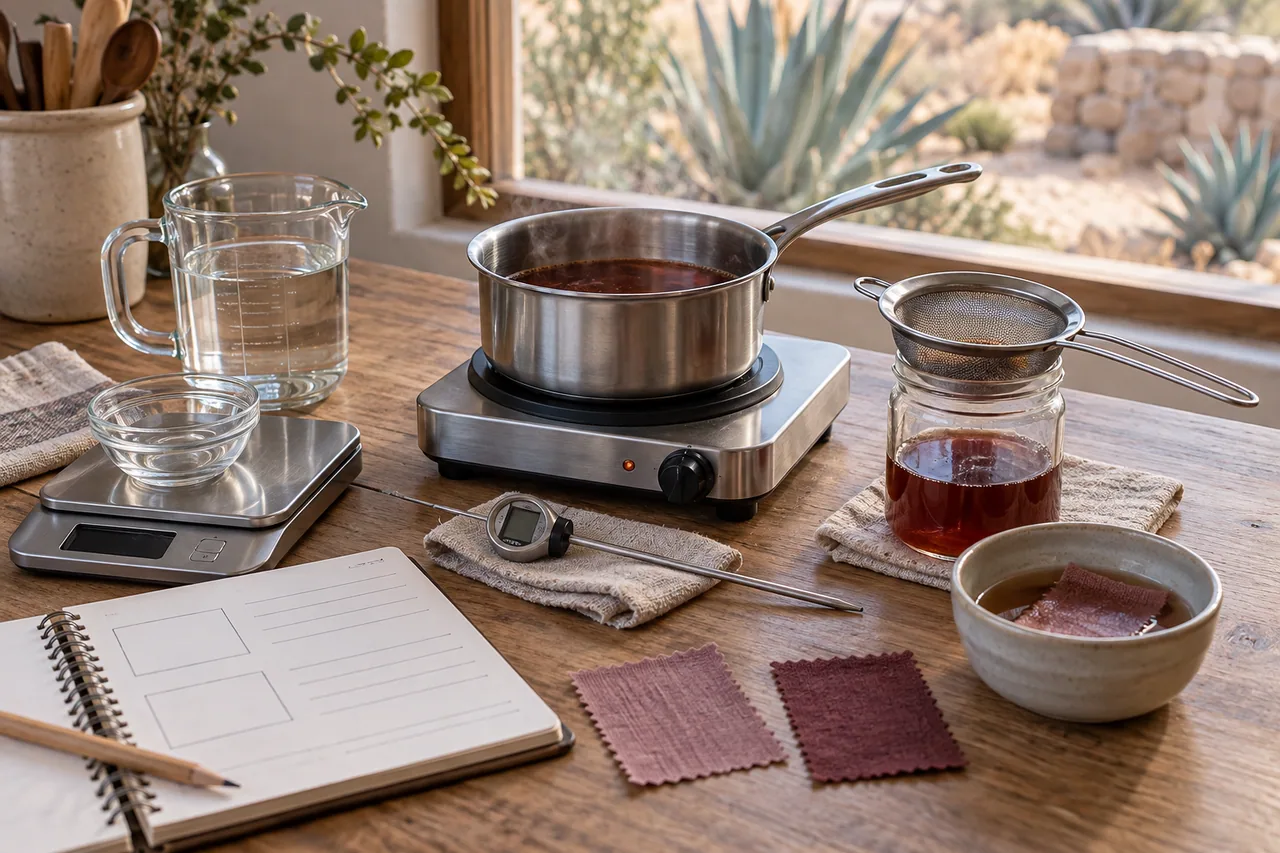
Strain the bath as needed, then test it on a small piece of the same prepared fiber you intend to use in the final project. Judging the swatch is more useful than judging the liquid alone. The resulting color depends on the relationship between the bark, fiber, mordant or other preparation, water, pH, time, and heat.
Call this a dye-yield test, not proof of authenticity. Other botanical materials can also release tannins and darken water. The test shows how the sample releases color under the conditions you used; it cannot prove species, origin, purity, ethical sourcing, or safety for cosmetic, culinary, medicinal, or other uses.
A good seller does not promise identical results
Natural dyeing has too many variables for a responsible guarantee of one exact shade in every studio and every batch. A trustworthy supplier should help you understand those variables rather than erase them.
Look for realistic photographs, clear identification of the plant and plant part, useful distinctions between forms, and instructions that encourage swatching. When a seller makes claims about processing, storage, or responsible sourcing, look for explanations that stay within what can reasonably be documented. Be cautious when every claim is absolute, every batch is supposedly identical, or the seller cannot answer ordinary questions about the material.
Quality is not one dramatic sign. It is the agreement among several quieter ones: bark that looks consistent with its description, information that holds together, a seller who answers plainly, material that arrives dry and sound, and a dye bath that performs when you put it to work.
A practical quality checklist
Before ordering
- Is the material identified as Mimosa hostilis inner root bark?
- Does the seller state the bark form and origin without making unverifiable guarantees?
- Do the photographs show texture, form, and natural variation?
- Are contact, shipping, refund, and payment details available?
- If the seller makes processing, storage, or responsible-sourcing claims, are those claims explained specifically?
- Can you begin with the smallest practical amount before committing to a larger purchase?
When the bark arrives
- Does the form and texture match the description?
- Is the material dry, with no condensation, wet clumps, visible growth, or musty odor?
- Does the package appear intact and protected from moisture?
Before a full dye project
- Have you made a measured miniature extraction?
- Have you tested the bath on the same type of prepared fiber?
- Have you recorded enough detail to compare the result with a future batch?
Violet Dye Co’s Field Archive documents Mimosa hostilis inner root bark in powder, shredded, and chip form across multiple outdoor settings. It is designed to help you examine texture, form, and natural variation before choosing. Violet Dye Co provides product information and directs shoppers to a separate checkout site to continue the ordering process.
If you are unsure which form fits your dyeing project, get in touch. Tell us about the fiber, batch size, and process you have in mind, and we can help you compare the forms before you choose.
Compare bark forms before you choose
Visit the Field Archive for original photographs of powder, shredded bark, and chips.