The Many Names of a Root
A single tree, growing across the dry forests of Mexico and the thornscrub of northeastern Brazil, has gathered a striking number of names in different languages and regions. Mimosa hostilis. Mimosa tenuiflora. Tepezcohuite. Tepescohuite. Jurema preta. Carbonal. Cabrera. Botanists use one accepted name; trade and local usage retain the others.
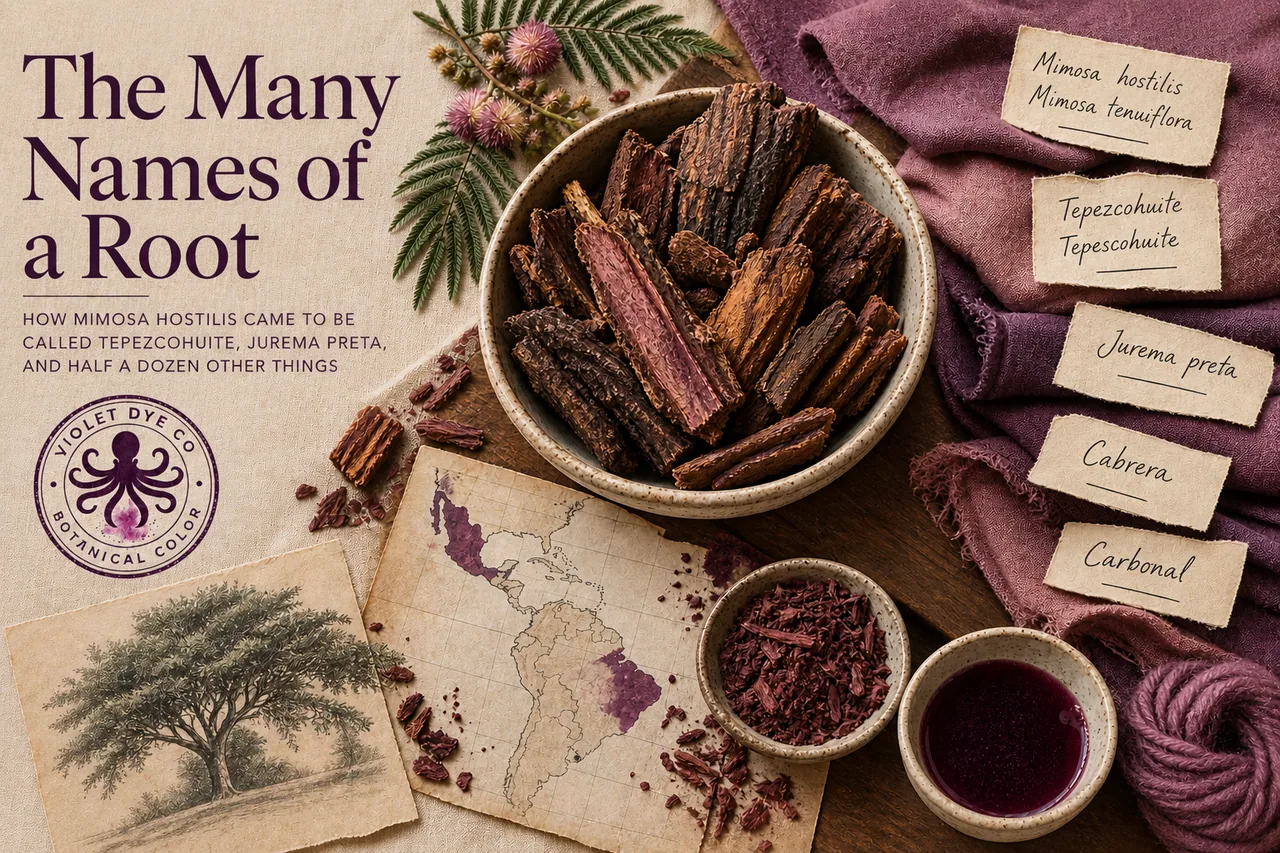
That refusal to simplify is its own kind of record. Names gather around plants that people actually use, and they travel with the languages, landscapes, and traditions that keep that use alive. By that measure, this root has been useful for a very long time.
A Name in Nahuatl
Tepezcohuite is widely described as a Nahuatl-derived name, but its exact etymology and translation are not settled. Published explanations differ, and a short gloss should not be presented as definitive.
What holds across the disagreement is the plainness of it. This is not a name that needs a dramatic translation to make the plant sound remarkable. It is the kind of name that belongs to a tree people have lived alongside for generations: descriptive, practical, and carried forward by use.
Spelling shifted as the word moved through Spanish and then English. Tepezcohuite and tepescohuite both appear in historical and contemporary sources, and usage varies by source. They are two spellings encountered as the name crosses languages.
Many Places, Many Names
In northeastern Brazil, jurema preta — black jurema — is a common name associated with this tree, which grows through the caatinga, the dry thornscrub that covers much of the interior. Other names, including calumbi, carbonal, and cabrera, appear in regional references, but usage is not uniform and common names can overlap across places and species.
The regional distinction is not only linguistic. Material sold from Mexican and Brazilian origins can vary in color and behavior, but origin is only one of several variables: processing, storage, extraction, and batch variation matter too. For a closer look at what dyers may notice between Mexican and Brazilian material, see our guide to bark from different origins.
Is Mimosa hostilis the Same as Mimosa tenuiflora?
Yes. Mimosa hostilis and Mimosa tenuiflora refer to the same tree in botanical and trade usage. Mimosa tenuiflora is the currently accepted botanical name; Mimosa hostilis is an older name that remains widely used in trade, labels, literature, and search results.
The reason both persist is straightforward. Botanical classification changed in the literature, but labels and search terms do not change all at once. Mimosa hostilis — and its abbreviation, MHRB — remains common among dyers, suppliers, and buyers, while Mimosa tenuiflora is more common in botanical databases and academic papers. If you are comparing suppliers and see both names, you are not automatically looking at two different products — but names alone do not establish origin, quality, form, or intended use.
The Root and the Dry Forest
Published range descriptions place Mimosa tenuiflora in dry regions of southern Mexico, Central America, and northeastern Brazil — landscapes defined by long dry seasons, thin soil, and plant communities built to survive both.
In the caatinga, jurema preta is described as a pioneer species. Associations with nitrogen-fixing bacteria have been reported, and its ability to establish in challenging conditions is part of why it appears in restoration discussions. The value of any planting or reforestation effort depends on the site, method, and local ecology.
This matters for anyone working with the bark. Some supplier accounts describe selective root bark harvesting that removes a portion of a lateral root while leaving the crown and much of the root system intact. Recovery depends on what was removed, how it was removed, and the season and site, so a harvesting label is not by itself proof of a particular outcome.
Bark, Tannin, and Color
The inner root bark of Mimosa hostilis is reddish-brown to near-black, thick, and rich in tannins. That chemistry helps explain its value in natural dyeing and its use in some leather-tanning traditions. It can contribute tannin to a dye bath, though the best process still depends on the fiber and preparation.
Tannins can bind to fiber, which helps explain why bark like this has been ground, steeped, and worked into cloth and hide. They also contribute to the material’s color behavior. Depending on mordant, pH, fiber, extraction, and batch, Mimosa hostilis root bark can yield soft mauve and dusty pink through deep purple, burgundy, plum, warm tan, and slate gray. Our color range guide maps those shifts in more detail.
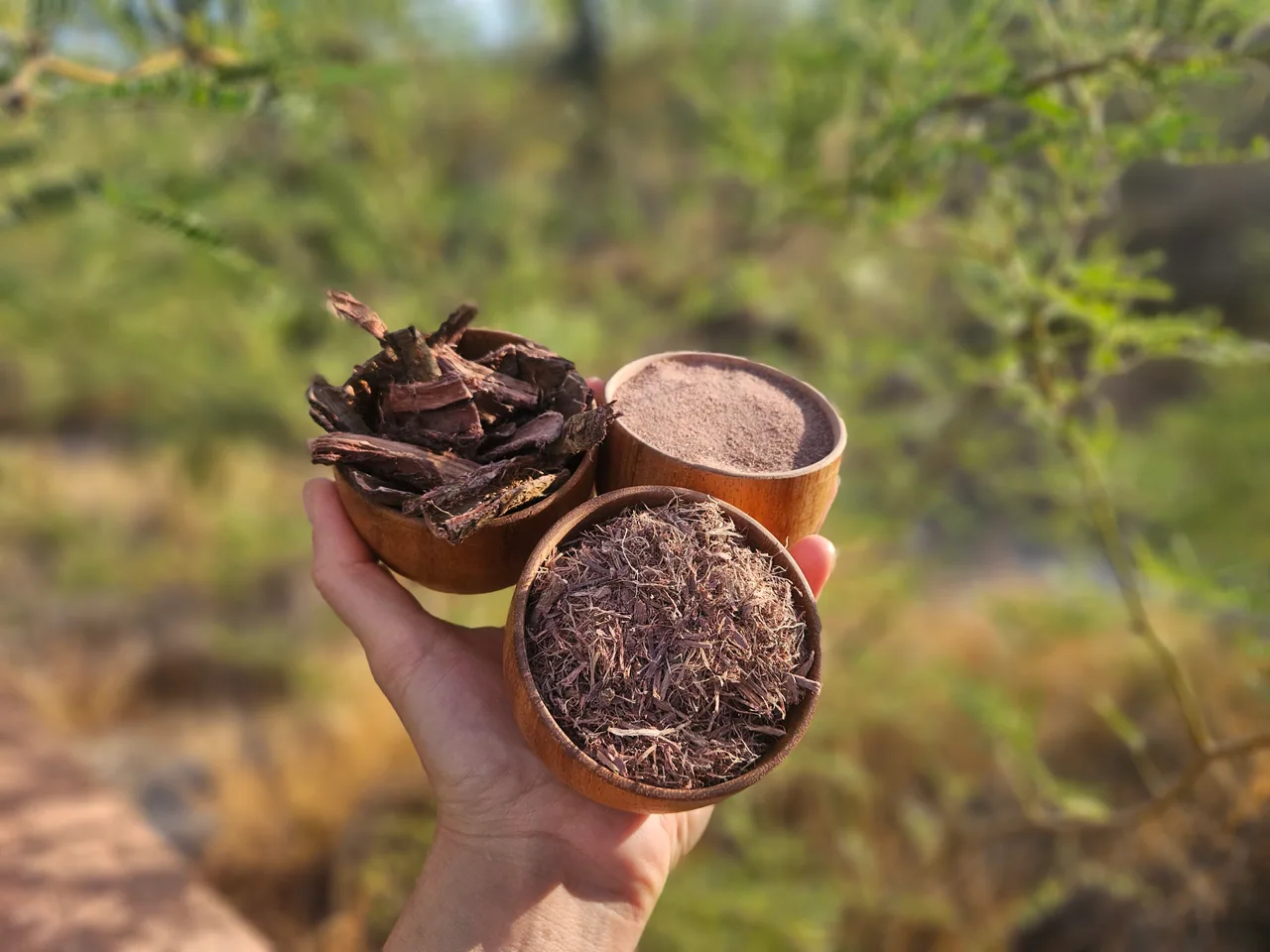
Powder, shredded bark, and chips are three ways of meeting the same material at different rates of release. The distinction comes from the structure and particle size of the bark, not from anything invented for a product page. For a practical comparison, read Chips, Shredded, or Powder — Which Should You Buy?.
What Remains
Purple has often been among the most difficult and expensive colors to make. In the ancient Mediterranean, Tyrian purple was labor-intensive, associated with elite status, and subject to restrictions in some historical contexts. The dyer’s chase for that color, by whatever means are available, is a recurring thread in craft history.
Mimosa hostilis sits in that lineage on different terms. A tree that grows in difficult conditions and carries tannin-rich root bark can give makers another way to work toward violet, with results shaped by fiber, mordant, pH, and process.
A plant with names like these has moved through translation, changing labels, and botanical reclassification, while local names remain attached to the places and practices where people use them. Names that persist are names attached to use. In this case that use often runs through color: bark ground fine enough to work into fiber, water gone dark with tannin, cloth carrying the tree’s history in its shade.
Keep reading
Explore the bark forms, color range, and dyeing techniques behind this many-named root.