Does MHRB Soap Stain? Color, Lather, and Fabric Transfer
What a bar's color can tell you—and what it cannot tell you about transfer.
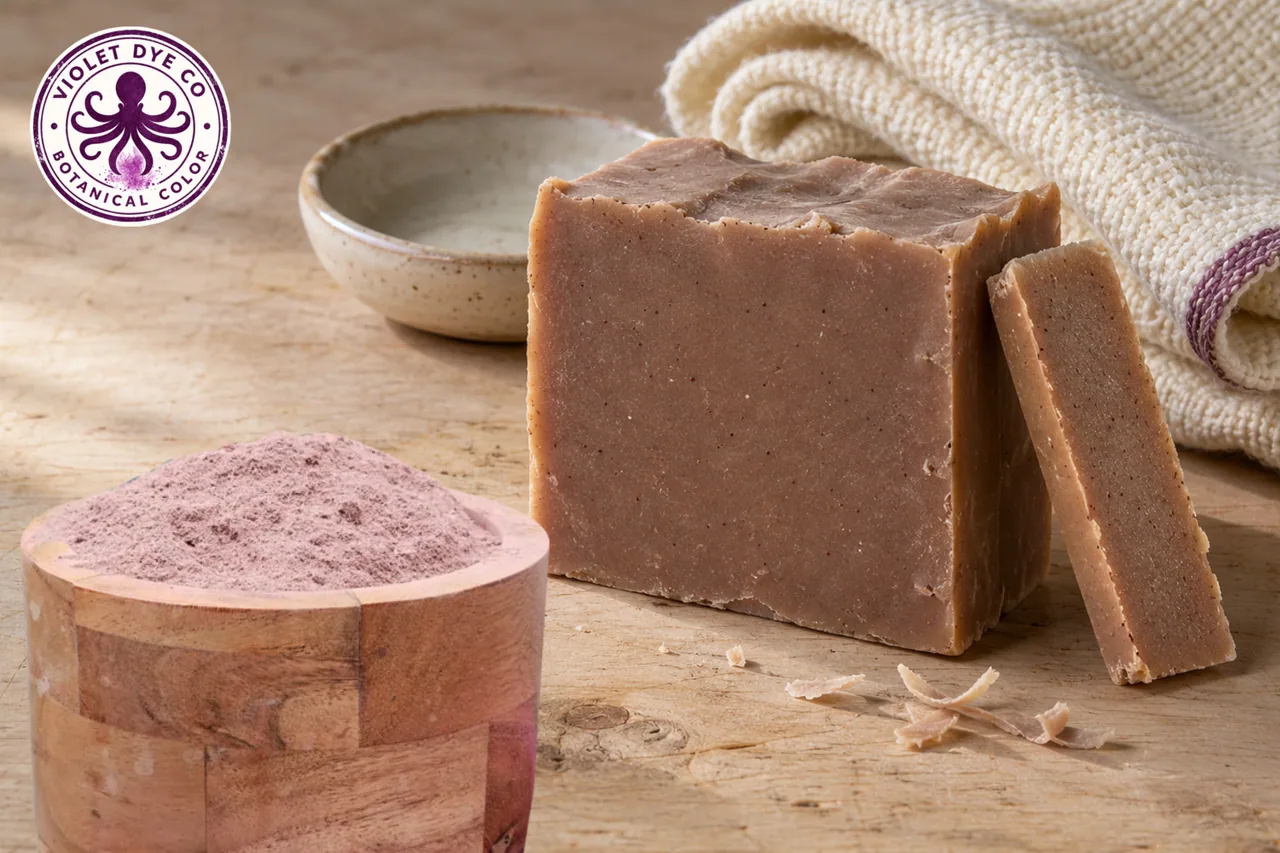
A beautiful bar and a stain-free bar are not the same claim.
Mimosa hostilis root bark powder—often shortened to MHRB—has a distinctive earthy color before it ever reaches a mixing bowl. But looking at the powder, or even a finished bar, cannot tell you whether its lather will carry color or leave a mark on a washcloth.
We do not have documented results establishing that MHRB soap is universally stain-free, and we cannot guarantee that a particular formula will not leave visible color on skin. The useful question is not simply “Does it stain?” It is “What transferred, onto what, and did it wash out?”
This is a guide to those observations, not another soap recipe or a report of Violet Dye Co soap-testing results.
Does MHRB Soap Stain? Separate the Questions
“Staining” often gets used for several different things. Keep them separate when you evaluate a finished formula:
- Colored lather: visible color in the foam or rinse water. That observation alone does not establish a lasting fabric stain.
- Surface residue: a mark beneath a wet bar or on its dish. Record whether it rinses away or remains after cleaning.
- Wet fabric transfer: visible color on a washcloth after contact. That is worth recording even if it later washes out.
- Persistent fabric staining: color that remains after the cloth has been cleaned according to its care instructions.
- Visible skin color: a separate question. Neither a clean cloth nor clear-looking rinse water establishes what will happen on skin.
A photograph of a dry bar answers none of these by itself. A result on one cloth also does not establish a result for every fabric, finish, or surface.
What a Transfer Check Can—and Cannot—Tell You
Only evaluate a formula already established as suitable for its intended use. A transfer check is a performance observation, not a way to establish that an experimental formula is suitable for skin contact.
Use a dedicated white test cloth and a washable, nonporous surface rather than a favorite towel or an unsealed stone countertop. Keep the observations simple:
- Record the formula or base, bark batch, powder amount, preparation, and age of the sample.
- Note visible color in the lather and any mark on the wet cloth or test surface.
- Record what remains after rinsing. For the cloth, also record what remains after laundering according to its care instructions.
- Photograph the observations in consistent light and keep the conditions with the photographs.
“The cloth looked clear after this wash” is a useful, limited observation. “This ingredient never stains” is a much broader claim that the check cannot support. Do not use skin as a test surface to resolve that uncertainty.
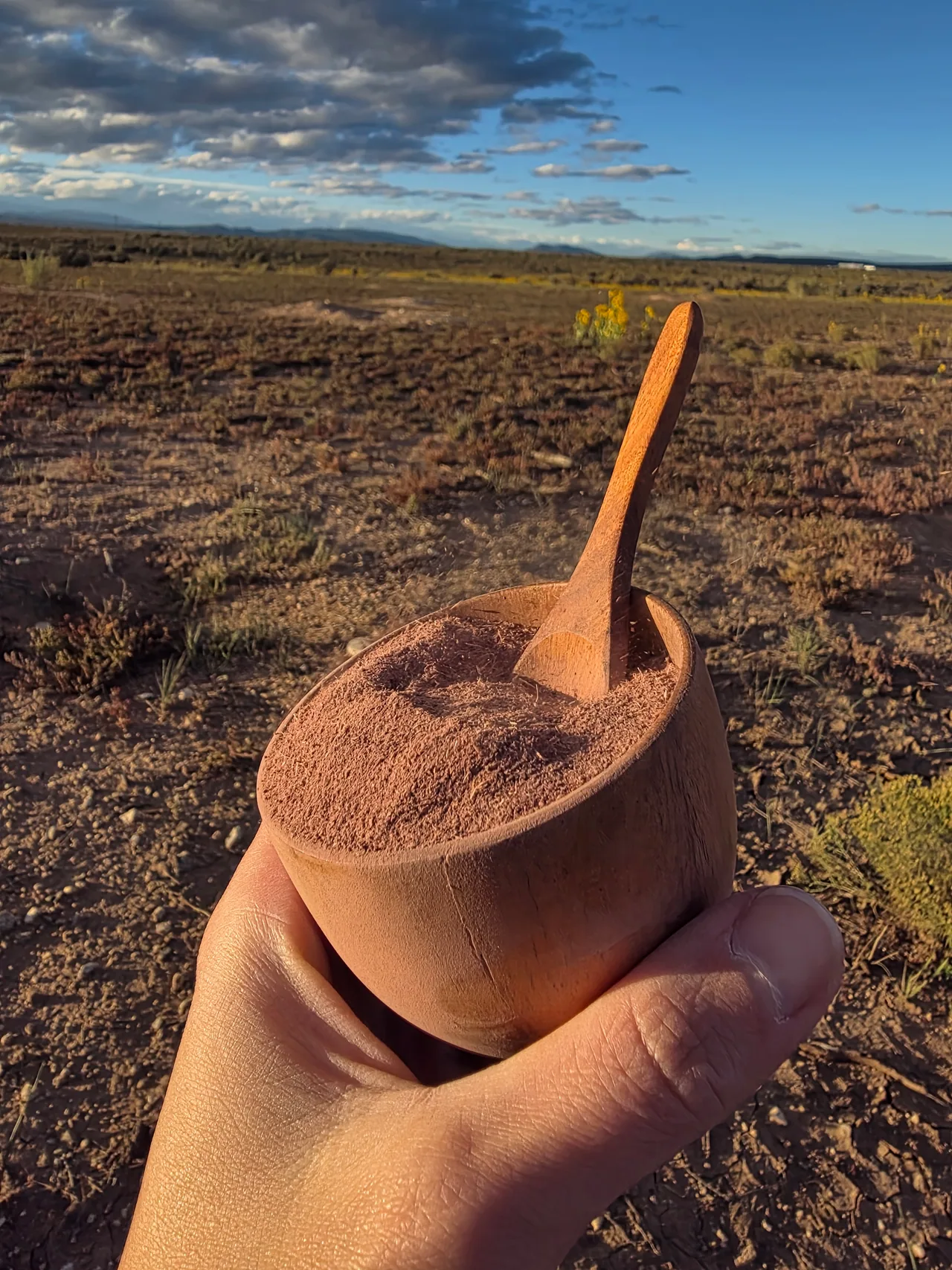
Why the Bar's Color Is a Separate Question
Do not count on a particular purple. A shade associated with Mimosa hostilis textile dyeing is not a promise about a finished soap formula.
Treat the base or recipe, amount of powder, and process as part of the result. Describe only what you actually observed under recorded conditions. A darker-looking bar is not, by itself, proof of greater transfer; a pale bar is not proof of none.
The pink-to-purple color bar above this article is Violet's brand palette, not a chart of tested soap shades.
Specks Are Not the Same as Dissolved Color
Finely milled bark is still plant material. Dispersing it through a base does not mean every particle dissolves. Visible specks, settled material, and color carried in water are different observations; do not assume they have the same cause or remedy.
For method-specific preparation, see our small melt-and-pour color test and separate cold-process soap guide. The two methods are not interchangeable, and their instructions should not be transferred from one to the other.
Keep the Claim as Specific as the Observation
“This sample left a mark on this cloth before laundering” tells another maker something concrete. It does not claim that every MHRB bar behaves that way.
Keep appearance, transfer, and suitability as separate questions. A successful-looking color experiment does not establish skin safety, commercial suitability, or approval as a cosmetic colorant. Our melt-and-pour guide includes a separate suitability discussion; this article does not establish a usage rate.
When comparing samples, change one variable at a time and keep the conditions with the result. That is more useful than chasing a shade from a photograph.
Continue Exploring
See the material itself in our Mimosa hostilis inner root bark powder listing, or return to the Studio guides for more on botanical craft.