Can You Use Mimosa Hostilis Root Bark in Dye Bottles or for Ice Dyeing?
A customer asked whether our bark could work with squeeze bottles or ice. Here’s what to consider before trying it on your favorite shirt.
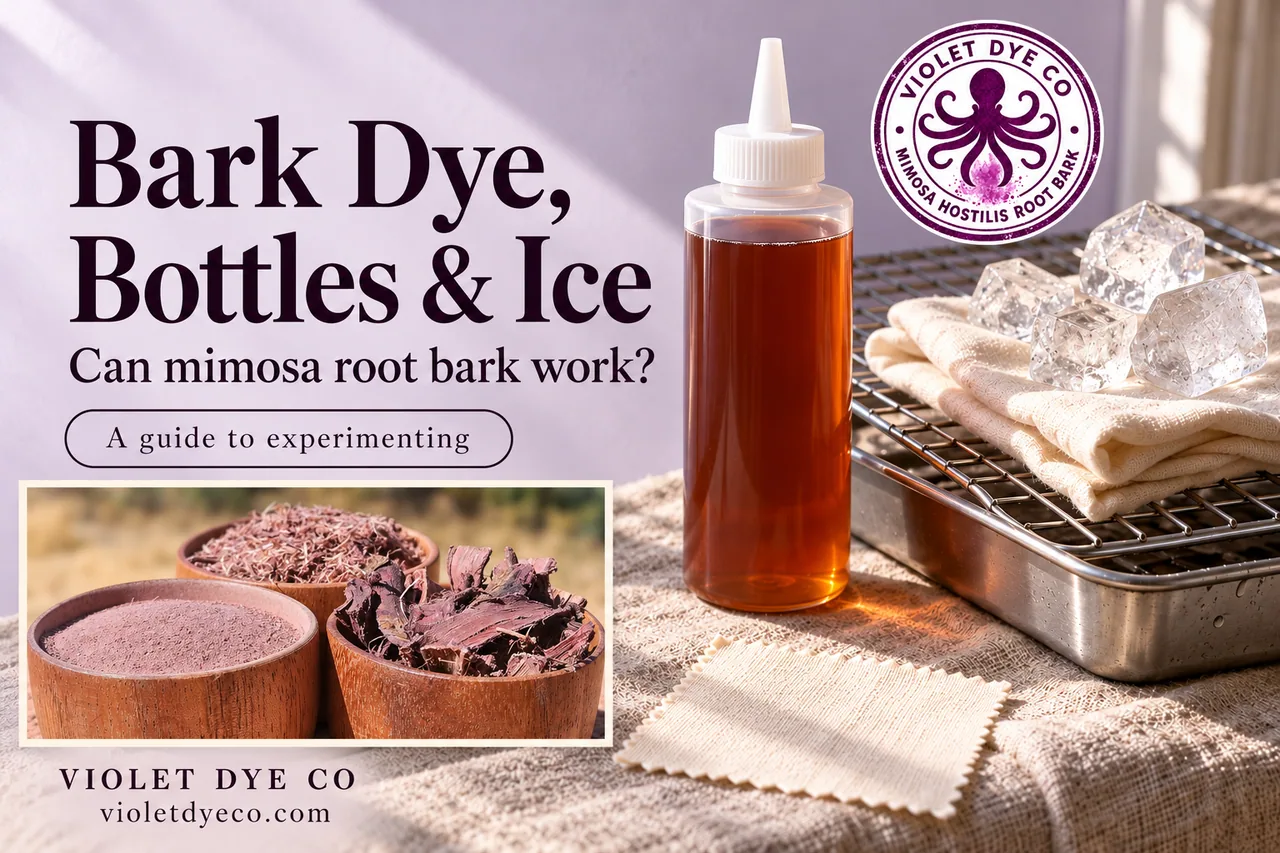
Someone recently asked us a good question: could you make dye from Mimosa hostilis root bark, put it in a squeeze bottle, and use it for tie-dye? And what about ice dyeing?
It makes sense to ask. If you’ve used a tie-dye kit, a bottle probably feels like the natural place for liquid dye to go. If you’ve watched ice melt through powdered color onto folded fabric, you might wonder whether finely ground bark could work the same way.
There are possibilities worth exploring here. But the bottle, the bark, and the way color stays on fabric are separate parts of the project. We have not tested these bottle or ice methods with our bark. This article is an exploratory guide, not a validated recipe.
Can bark dye go into a squeeze bottle?
A cooled, thoroughly filtered bark dye liquid may be possible to dispense from a suitable squeeze bottle. That could give you a way to place liquid onto selected areas of fabric. What the bottle does not do is change how the dye interacts with the fiber.
Our existing Mimosa hostilis tie-dye guide uses tied fabric immersed in a strained, heated botanical dye bath. Applying liquid from a bottle changes its placement and the amount reaching the cloth; it can also change contact time and temperature compared with immersion.
You are adapting the method, so the result needs its own test. A dark mark on wet fabric does not establish washfastness. The useful comparison is what remains after the sample has been finished, washed, and dried.
Ground bark is not an instant dye powder
Mimosa hostilis root bark powder is finely ground plant material. It is not the same product as a purified dye extract or a formulated fiber-reactive dye. The plant is also known botanically as Mimosa tenuiflora.
Preparing bark in water can release color, but it also leaves plant particles in the mixture. Those particles can settle, collect in folds, and clog a narrow bottle nozzle. For a bottle experiment, prepare the dye liquid separately and remove the solids before filling the bottle. Our fabric-dyeing guide describes soaking, gently heating, and straining a bark bath.
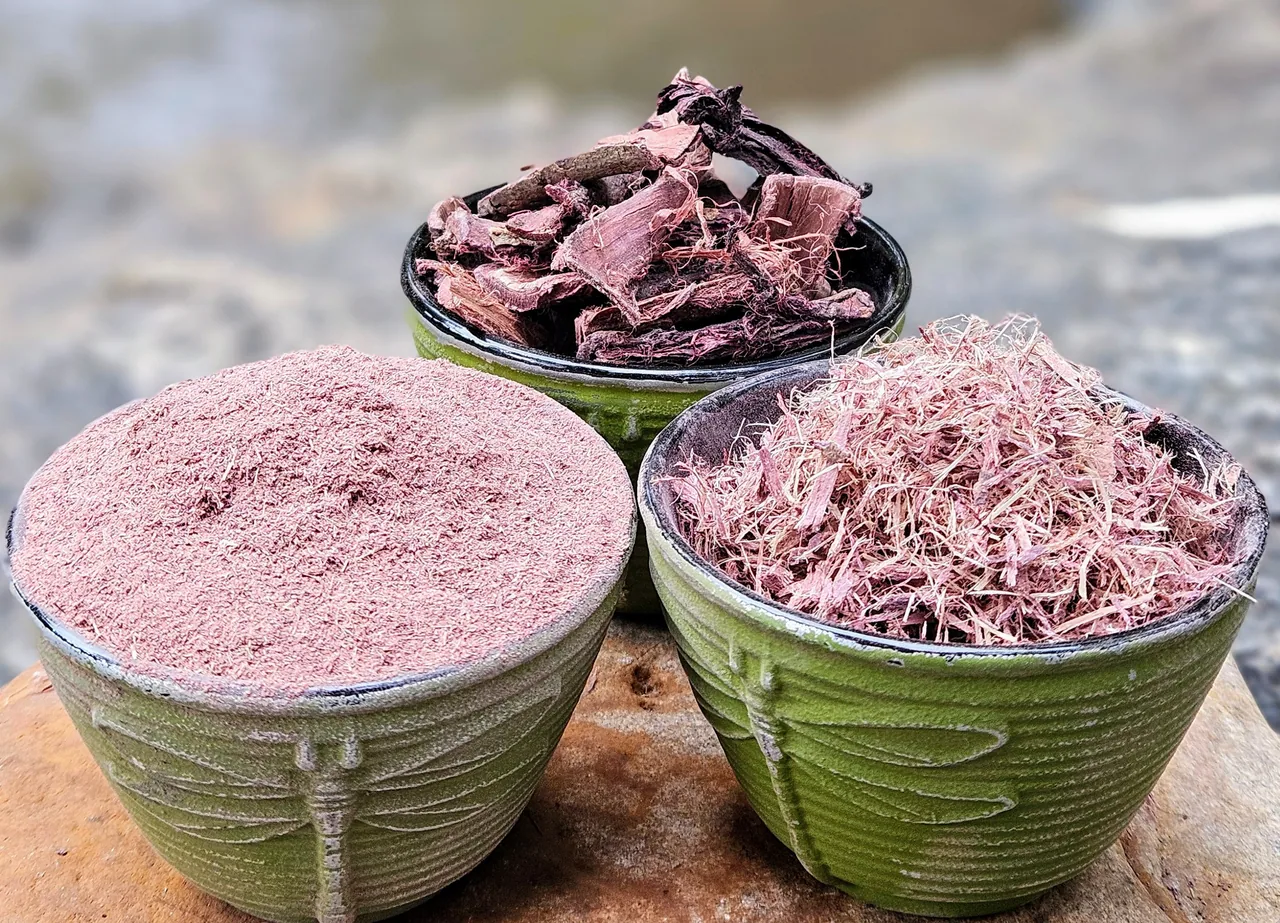
Shredded bark is our suggested starting form for beginner fabric-dyeing projects because it is easier to strain than fine powder. Powder and chips are also options; our guide to the three bark forms explains their handling differences.
Choose the form for how you want to prepare the liquid—not simply because the finished liquid will go into a bottle.
What would a useful bottle test look like?
Start with scraps of the fabric you actually intend to use. Prepare them together using a scouring and mordanting process appropriate for that fiber. Cotton and linen need different preparation from wool and silk; our fiber guide introduces those differences.
Keep one sample for your usual immersion method. Use another to explore bottle application:
- Filter the prepared liquid carefully. If sediment remains, let it settle and filter again.
- Cool it before transferring it into a clean, labeled craft bottle suitable for the liquid’s temperature.
- Apply a measured amount to a small area or a simple folded sample.
- Record the bark weight, extraction water volume, final liquid volume, and amount applied. Note your fiber, mordant, and water source too.
Then follow a finishing procedure appropriate to the natural dye and fiber you are using. We do not have a validated Mimosa hostilis squeeze-bottle recipe or a universal setting time to recommend. An overnight rest, pressing with an iron, or a quick steam should not be assumed to make the color washfast.
If you move the sample into a dye bath afterward, remember that immersion can spread the color and change the placement you made with the bottle. The first trial is for learning—not for committing an entire garment before you know how it washes.
Can you ice-dye with Mimosa hostilis root bark?
Treat it as a botanical experiment rather than a direct substitute for conventional ice dyeing.
Many cotton ice-dye tutorials use powdered fiber-reactive dyes, such as Procion MX, with soda ash. Melting ice carries the dye through the folds, while the dye’s chemistry and required conditions allow it to bond with the fabric.
Jacquard describes Procion MX as a dye that fixes chemically rather than requiring heat. Its dedicated ice-dye blends are formulated to separate into component colors. Other products have different instructions: Rit’s powder ice-dye method, for example, includes a separate setting step. Ice dyeing is not one universal chemical recipe.
Raw root bark powder behaves differently. It contains plant material from which color must be released. Sprinkling it over ice does not reproduce the chemistry of a fiber-reactive dye. You might see staining or movement of color; that alone would not establish good wash performance. Do not expect the same multicolor splits shown in tutorials using blended commercial dyes.
What about freezing prepared dye into cubes?
That is a different experiment from sprinkling raw bark over ice. Freezing a previously prepared, filtered dye liquid could let you explore how the liquid moves as it melts. You would be testing a way of delivering botanical color, rather than relying on melting ice to draw it from dry bark.
However, we have not established a repeatable Mimosa hostilis dye-cube method. Freezing does not replace fabric preparation or demonstrate that the resulting color will hold.
If you investigate it, use a dedicated, clearly labeled craft tray and small prepared swatches. Keep the dye cubes separate from anything intended for food or drinks. Compare the washed, dried result with a sample dyed using your usual bath method.
Should you add soda ash like an ice-dye tutorial says?
Do not transfer the soda-ash step from a fiber-reactive recipe automatically. Soda ash has a specific role in those dye systems. Adding it to bark liquid does not turn botanical colorants into Procion MX dye.
Changing the pH can also change your result, introducing another variable into an unfamiliar method. Use preparation and finishing instructions written for your fiber and natural-dye process. Save pH experiments for separate, labeled samples rather than combining several changes at once.
If you mainly want patterns, begin with the folds
You do not need a squeeze bottle or ice to explore patterned fabric with root bark. Folding and binding create areas that dye reaches more easily and areas it reaches less easily. That gives you a way to investigate circles, bands, and irregular marks while working with an immersion method.
Our natural tie-dye approach is the more fully documented starting point in our current guides—not an independently validated formula for every fiber or project. Once you have a sample you understand, changing the application method becomes a more informative experiment.
Keep the finished swatches. Photograph them dry, note how they were prepared, and compare them after washing. A promising technique is easier to develop when you can see exactly what changed.
Planning a botanical dye project? Explore our Mimosa hostilis inner root bark, or contact Violet Dye Co with your fabric type and project idea.