What Is Violet Noise?
What does violet sound like? A short guide to a different kind of spectrum.

Violet noise, also called purple noise, is random sound whose power spectrum emphasizes high frequencies. It is usually heard as a thin, bright hiss.
Violet is a color. So what does it mean when someone calls a sound violet?
The name refers to the way the sound’s power is spread across frequencies. It does not refer to a particular note, and it does not mean that sound and light share a frequency.
What is violet noise?
Imagine a graph with sound frequency running from low to high across the bottom. Violet noise climbs steeply as you move to the right. In the ideal mathematical model, its power spectral density is proportional to frequency squared, often written as f².
The technical description is about 6 decibels more power density per octave. An octave means the frequency doubles. Between 1,000 and 2,000 hertz, for example, violet noise has roughly four times the power per unit of frequency at the higher point.
That describes the shape of its spectrum, not the total power in an octave band or how loud a recording will play. Practical recordings reproduce the pattern over a limited frequency range, rather than across all possible frequencies.
Violet noise compared with other noise colors
If you have heard brown noise, the comparison is useful. Its spectrum slopes down at about the same rate that violet noise slopes up. Brown emphasizes lower frequencies; violet emphasizes higher ones.
White noise has equal power density for each hertz. Blue noise tilts upward too, though less steeply than violet noise. Pink noise tilts downward less steeply than brown.
| Noise color | Approximate slope | Spectral pattern |
|---|---|---|
| Brown | −6 dB per octave | Strong tilt toward low frequencies |
| Pink | −3 dB per octave | Gentler tilt toward low frequencies |
| White | 0 dB per octave | Equal power per unit of frequency |
| Blue | +3 dB per octave | Gentler tilt toward high frequencies |
| Violet / purple | +6 dB per octave | Strong tilt toward high frequencies |
These are mathematical descriptions, not volume settings. The actual sound depends on the recording’s frequency range, playback level, speakers, and headphones.
Why a color name?
Violet light sits toward the short-wavelength, high-frequency edge of the visible spectrum. That makes violet a fitting borrowed name for a noise pattern weighted toward high audio frequencies.
Our essay on why violet means more than a color looks more closely at spectral violet and the meanings people attach to purple. The analogy between light and sound has a limit. Light is electromagnetic radiation. Sound is a vibration moving through a medium such as air. Their frequencies are measured in hertz, but they are different phenomena on vastly different scales.
Violet noise does not contain violet light; violet fabric does not make violet noise. The connection is in the way we describe a spectrum. Color gives us a shorthand for its shape.
What does violet noise sound like in real life?
Think of the bright edge of escaping steam or the lingering sizzle of a cymbal. Those sounds are only rough comparisons: real-world sounds have their own uneven mixtures of frequencies. A generated violet-noise track sounds more continuous and less eventful, like a very fine hiss.
There is little of the low rumble that can make brown noise sound heavy. White noise often sounds fuller by comparison, though the particular recording and playback system can change that impression.
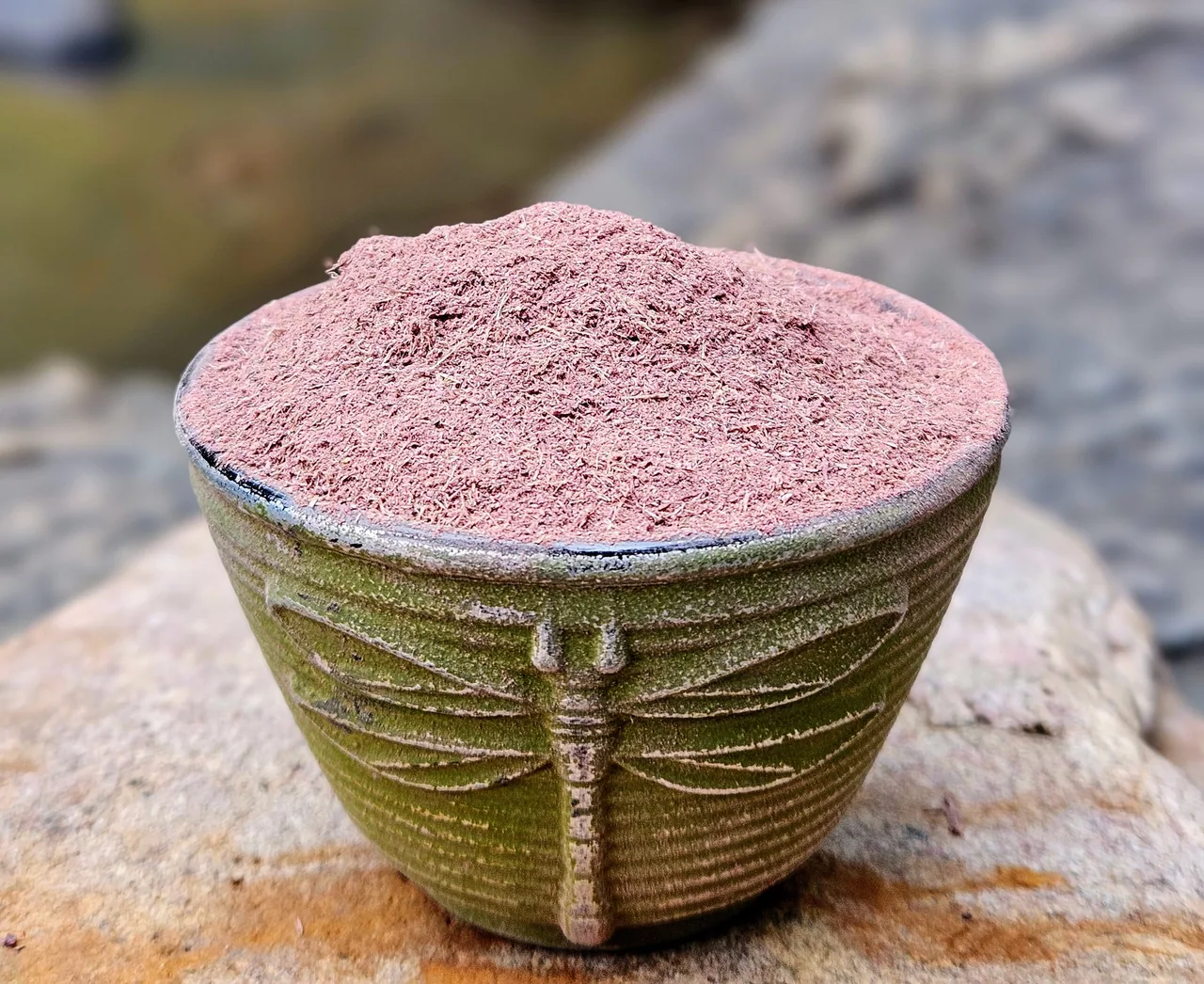
From sound spectra to material color
We work with visible violet at Violet Dye Co, where color changes with fiber and process.
Our natural dye color guide follows those shifts in the dye bath, while The Blood of Murex & the Root of the Desert traces the long pursuit of purple on cloth.
Violet noise belongs to a different kind of spectrum. It is a useful reminder that a color word can describe a relationship, even when there is no color to see.
For the practical side of color, explore our natural dyeing tutorials.